Foto: titoalfredo, Flickr, Creative Commons. Sin modelo único para que las gestoras internacionales lleguen a LatAm: ¿Qué estrategias funcionan en cada mercado?
According to the latest research from global analytics firm Cerulli Associates, local regulatory efforts are improving cross-border product distribution opportunities in Latin America.
“We believe that the regional pension system and the private wealth segment continue to present global managers and ETF sponsors with the biggest opportunity for cross-border product distribution in Latin America,” states Nina Czarnowski, senior analyst at Cerulli. “Contributions in most markets in the region are mandatory, and are, consequently, growing faster than their respective financial systems, driving the need to expand to foreign markets. Asset managers targeting the wealthy are able to take advantage of a wider range of products and strategies as the segment tends to have fewer regulatory restrictions.”
“Concerned with recent domestic market devaluation and the inability to fund workers’ retirement, industry players, including pension funds and regulators, are increasingly exploring ways to generate appropriate, higher returns,” Czarnowski explains. “While it makes sense to hedge pension liabilities with domestic fixed-income instruments, it is wise to diversify the equity portion globally given the concentrated, shallow domestic markets.”
Cerulli warns that one of the biggest challenges to cross-border fund distribution in the region, however, remains political. While pension managers and regulators recognize the need to diversify pension portfolios overseas, it is in the governments’ best interest to keep investments local–in particular in infrastructure projects–to foster local economy and business.
“Unfortunately, conducting business in Latin American has no ‘passporting’ benefits. Countries in the region have different regulatory bodies that, in turn, have different sets of rules and regulations. Cross-border mutual funds offered in Peru may not be the same mutual funds accepted in Mexico. Distribution channels commonly used in Chile may not be popular in Brazil,” Czarnowski continues. “Although some resources can be leveraged region-wide, global managers should consider strategies targeted at a specific market, given that a single game plan may not be transferrable from one Latin American country to another.”
Photo: Spanish National Library, Flickr, Creative Commons. The One Year Transitional Period for AIFMD has Come to an End
As of 22nd July, the CSSF, market supervisor in Luxembourg, had received a total number of 773 applications submitted according to the law of 12 July 2013 on alternative investment fund managers (hereafter “AIFM”) with a total of 215 requests for authorisation and 558 requests for registration.
Following the processing of the 215 requests for authorisation, 151 entities have been approved as AIFM by the CSSF as at 22 July 2014. Among these 151 approved entities, 74 entities are on the official list of authorised AIFMs.
The CSSF notes that a certain number of those applications for authorisation, where the approval process is still ongoing, are linked to entities which were not active in the field of alternative investment funds before the 22 July 2013 and are, therefore, not subject to the provisions of the transitional period. For the regulated entities active before 22 July 2013 and, thus, required to apply for authorisation under the AIFM law by the 22 July 2014 at the latest, applications have been submitted to the CSSF in due time.
In relation to the 215 requests for authorisation, 105 have been received from existing UCITS management companies, 48 from existing non-UCITS management companies and 62 from other existing or newly created entities.
Furthermore, a total of 487 entities have been granted the status of registered AIFM under the provisions of Article 3(2) of the AIFM Law as at 22 July 2014. The remaining 71 applications for registration are either incomplete as at 22 July 2014 or have meanwhile been withdrawn by the applicant.
With regard to the existing non-UCITS management companies which have not applied for authorisation or registration in Luxembourg, it should be noted that they have designated or are in the process of designating a third-party AIFM established mainly within the EU.
Foto: ThatsWhatIam, Flickr, Creative Commons. La bolsa se va de vacaciones, ¿y tú?
International companies continue to turn to U.S. stock exchanges to connect with American investors for their initial public offerings and subsequent capital raising activities, according to BNY Mellon’s Depositary Receipts 2014 Midyear Update.
The first half of 2014 saw the highest level of DR capital raisings in the last three years. As of June 30, 41 capital markets transactions globally raised more than $9.1 billion, well ahead of the $3.6 billion raised through 20 transactions during the same period in 2013. BNY Mellon served as depositary bank for 18 of this year’s deals, which have raised over $3.1 billion.
Companies from Asia-Pacific have dominated activity to date, accounting for almost 60% of capital raised with more than $5.5 billion. China was responsible for nearly half of the new capital raising DR programs, led by online direct sales firm JD.com, whose IPO on NASDAQ raised $1.8 billion in May. The majority of DR transactions in the first half of 2014 were from emerging countries. TBC Bank’s listing of DRs on the London Stock Exchange represented the largest IPO ever to come out of Georgia. BNY Mellon also supported Brazilian telecarrier Oi in raising $3 billion in the public markets, 40% of which was in DR form.
“After a period marked by concern over U.S. Federal Reserve tapering, investor sentiment is again turning to emerging markets to seek out innovative companies with which to partner,” said Christopher M. Kearns, CEO of BNY Mellon’s Depositary Receipts business. “The vigorous return of foreign IPOs on U.S. exchanges, using the efficiency and scope of DRs, would indicate that global firms and investors see this as a healthy marketplace with strong upside.”
Depositary receipts typically represent non-U.S. companies’ ordinary shares and trade on traditional and over-the-counter markets and major stock exchanges worldwide. There are now more than 3,700 DR programs globally available to investors.
Key highlights
Fifty-five new sponsored DR programs were established through June 30, the biggest jump in sponsored programs since 2011. BNY Mellon served as depositary for 28 of those.
The volume and value of total DRs traded rose compared to a year ago. Some 74.6 billion DRs valued at $1.49 trillion were traded globally in the first half of 2014, up 3.5% and 15.5%, respectively, from the first half of 2013.
As of March 31, 2014, total global investment in depositary receipt programs stood at $826 billion, up 18% compared to the same period in 2013.
Foto: jurvetson. Legg Mason adquiere la gestora británica Martin Currie
Legg Mason has announced the acquisition of Martin Currie, an active international equity specialist based in the United Kingdom. With offices in six locations, Martin Currie expands Legg Mason’s product capabilities in active equity strategies including Global Equity, Global Emerging Markets, Asian Equity, European Equity and strategies specifically focused on Japan and China.
The transaction is expected to be slightly accretive to Legg Mason’s earnings in the first year and is scheduled to close during the fourth quarter of 2014. Terms of the transaction were not disclosed.
The firm will become a core independent investment affiliate of Legg Mason, along with Brandywine Global, ClearBridge Investments, The Permal Group, QS Investors, Royce & Associates and Western Asset Management.
Also as part of this transaction, Legg Mason Australian Equities with US$2.5 billion in AUM and a 14-person team led by Reece Birtles, will become part of Martin Currie, consistent with Legg Mason’s strategy of creating fewer and larger investment affiliates. LMAE is an active Australian equities manager, offering clients strategies that include Small Cap, Property/Infrastructure, Income and Large Cap Value. These strategies will continue to be managed by the LMAE investment teams, while the combined business will benefit from an expanded global institutional reach.
With over 130 years of history and as an active international equity specialist, Martin Currie is focused on alpha generation alongside building superior client relationships. As such, it adds significantly to the Legg Mason affiliate lineup:US$9.8 billion of assets under management; afundamental research-driven investment process to deliver index-relative, unconstrained, absolute return and equity income strategies through both segregated mandates and fund products; an investment philosophy and process that is both scalable and distinctive. The group has key capabilities in Global Emerging Markets, Asian, European and Global equities; adeeply-resourced and experienced investment team, with 46 investment professionals and a risk team that is integrated into the investment process and has strong analytic capabilities, technology and resources; a multi-award winning alternative product range with a 14-year track record in both Japan and European long/short; a broad institutional client base including sovereign-wealth funds, pensions, corporations, foundations, charities, family offices and financial institutions; a truly international client base with a balanced spread across Australia, Asia, EMEA and the US.
Joe Sullivan, President and CEO of Legg Mason said, “Martin Currie’s active international equity capabilities fill our largest product gap and are a perfect complement to our existing investment capabilities. The Martin Currie management team shares our passion for innovation, our commitment to delivering compelling investment results and our singular focus on the needs of our clients. Martin Currie is a perfect strategic fit for our growing equity business in Australia, where we see meaningful opportunity. We believe that, over time, our global retail distribution platform will be able to meaningfully leverage Martin Currie’s broad based investment capabilities. We are delighted to be the partner of choice for great investors such as Martin Currie.”
Willie Watt, Chief Executive of Martin Currie, said: “We believe Legg Mason is the ideal strategic partner to grow our business further and will position us as the strategic international equities specialist in one of the most powerful independent investment management companies globally. Most importantly for our clients, the partnership gives us investment and operational autonomy, and this means our client proposition remains unchanged.
“In partnership with Legg Mason we will have efficient access to new markets and client segments through their market-leading and sizeable retail distribution network as well as valuable seed capital which will allow us to be at the forefront of new product innovation”.
The senior management team at Martin Currie has signed new long term contracts in conjunction with the transaction providing continued strength and stability.Legg Mason was advised by J.P. Morgan Securities LLC and Dechert LLP; Martin Currie was advised by UBS Investment Bank; and the Institutional Selling Group was advised by Herbert Smith Freehills CIS LLP.
To the naked eye, market conditions have appeared benign during Q2 2014: returns have been largely positive across the asset mix, with some equity indices, notably the US S&P 500, inching up to make new record highs. Contrary to our expectations, investors continued their love affair with bonds, with flows accelerating in some areas of the market. Investors generally took bad news in their stride. An escalation of the crisis in Eastern Ukraine, the insurgency of Isis in Northern Iraq, and the downward revision of Q1 US gross domestic product growth to a grim annualised rate of -2.9% caused no obvious damage.
We suspect that the driving force behind investor stoicism has once again been expectations of continuing liquidity. The world’s central banks, taking their lead from the Fed, have been remarkably cautious in proceeding down the path of less accommodation, and ultimately towards policy tightening. Some have even turned retrograde: the European Central Bank (ECB)’s shift to negative deposit rates was a seismic moment. We live in strange times, indeed, when one of the world’s major central banks charges banks to deposit money with it.
Another key observation is that market volatility and trading volumes are now at curiously low levels. Rather than feeling the sense of euphoria that comes from being five years into a multi-year bull market, many investors are nervous about the eerie stillness that has developed. The S&P 500 is seeing its lowest trading volumes for eight years: the norm for bull markets is that volumes rise in tandem with prices. Concurrently, the CBOE Volatility Index is trading below 11 for the first time since 2007. Thirty-week annualised historic volatility is nearing pre-crisis levels in both developed and emerging market equity indices (see chart).
Equity market volatility near pre-crisis lows
Source: Henderson Global Investors, Bloomberg, 30-week annualised historic volatility, % per annum; weekly data from 9 January 1991 to 21 May 2014.
Analysis of the bond markets tells a similar tale: notably, volatility in high yield bonds, currency and US interest rates is at its lowest ebb in 7+ years. In the sovereign bond markets, Spain and Italy have recently been borrowing 10-year money near or below what the UK government pays. This is a stunning reversal compared to two years ago, when those two governments were paying well in excess of UK borrowing rates.
One possible explanation for these strange developments is that investors have been content to numb their minds from some harsh truths in their reach for yield. If that is the case, it may be wise for them to heed the recent warning that came from the Bank for International Settlements that subdued volatility and low interest rates have encouraged investment in the “riskier parts of the investment spectrum” even as valuations became far less appealing.
The economic and market cycle is moving on and we are arguably entering one of its more dangerous phases. Interest rates will inevitably have to rise off their lows. The timing and rate of increase remains opaque and, in certain circumstances, it is entirely possibly that policy changes could come faster and be more dramatic than investors currently anticipate. As we have seen, faith in central banks is extremely high. If it were to emerge that that confidence was misplaced – if, perchance, the Fed misjudges the strength of US growth or the risk of inflation, this could trigger a severe bout of indigestion for asset markets.
By Bill McQuaker, Co-Head of Multi-Asset at Henderson
CC-BY-SA-2.0, FlickrLeft to right, Roberto Garcia from Mora WM, and Mario Rivero, Director at FlexFunds. Courtesy Photo . FlexFunds Launches FlexETP, Tailor Made ETPs for any Asset Allocation
Asset management is currently undergoing a business model transition. Financial advisors are beginning to use a fee-based approach rather than the traditional management model based on transactions which, until recently, had been the standard approach in broker compensation, explains FlexFunds’ director, Mario Rivero, to Funds Society.
According to Rivero, the classic model did not always align the client’s best interests with those of the advisor. “Financial advice should be based on a management model which is not dependant on the number of transactions, and, like the industry, the advisor seeks greater consistency and transparency in this regard,” he said.
Rivero explains that in this respect, FlexFunds, a company with offices in Miami and New York, moves ahead of this need in the market by approaching it with a new solution. FlexFunds issues an Exchange-Traded Product, called FlexETP, which is tailored for managing any asset class. FlexETPs have the distribution power of an ETF and the management versatility of a mutual fund.
The underlying assets can be either public or private. These assets are packaged into a product listed with ISIN / CUSIP, and multi-currency custodiable via Euroclear, which makes it very easy for any institution or bank to acquire, deposit, and value.
“Creating an investment fund has restrictions on the type of assets and commissions, as well as requiring a tangible investment of both time and capital,” Rivero added.
“For a complete asset management solution, FlexETP can securitize any investment strategy, and their distribution may be accessed from any country. This is very useful, especially in fragmented markets like Latin America,” he explained.
FlexFunds works in collaboration with Citi, PricewaterhouseCoopers and Sanne Group. As to how they operate and work at FlexFunds, Rivero said that a fund or product is issued within a period of two weeks at a cost affordable to any broker, “which is a great advantage over comparable structures which are more complex and costly.”
In this respect, Rivero explained that Roberto Garcia from the Miami office of Mora Wealth Management is an example of firms which have already opted for FlexFunds vehicles. He launched an investment fund with FlexFunds, focused on a systematic strategy with ETFs, a year ago.
“I found the program very simple and useful for creating my fund,” says Roberto, “having the fund’s administration covered allows me to focus on its management and the relationship with my investors. Membership in the FlexETP is simple and has enabled us to attract clients from other institutions to our strategy. Since its launch, the subscription has multiplied by more than six times the initial amount,” said Garcia.
Lombard Odier Group has announced the appointment of Henry Fischel-Bock as Head of its domestic European private client business, effective 1 January 2015.
Henry Fischel-Bock joins Lombard Odier from Barclays Wealth where he led the UK & European wealth management business until July 2014. In his new role Mr. Fischel-Bock will report to Frédéric Rochat, a Managing Partner of Lombard Odier.
“We have built a significant private client business within the European Union with a single and efficient technology platform that allows us to offer clients solutions to their increasingly complex needs,“ said Mr Rochat. “We are delighted to welcome someone at our Group with Henry’s longstanding wealth management experience. His drive to offer clients a differentiated and long-term value proposition is closely in line with our own business model.”
Lombard Odier’s domestic European private client business offers wealthy individuals and their families a full range of integrated services in the areas of estate planning, investment management, tax reporting and custody services. It operates through offices in Amsterdam, Brussels, London, Madrid, Paris and Luxembourg.
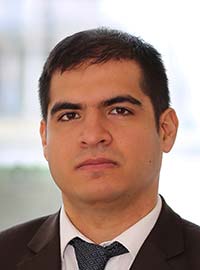
Dravasp Jhabvala se ha unido a la gestora británica. Schroders une a sus filas a dos expertos en materias primas
Schroders announced the appointment of two commodity experts, James Luke and Dravasp Jhabvala, to further strengthen its Commodities team.
James Luke joins the London-based team, headed by Geoff Blanning, as Commodity Fund Manager/ Metals Analyst and Dravasp Jhabvala as Commodity Quantitative Analyst.
James was previously Co Head of Metals Research at J.P. Morgan. He has 9 years’ of experience within commodities in London and Hong Kong and will provide Schroders with invaluable specialist insights into metals.
Dravasp joins Schroders from Palaedino Group in Geneva where he specialised in developing investment strategies for commodities. Dravasp holds a Master of Science in Statistics and will work on enhancing Schroders’ quantitative models for commodities.
Schroders is a market-leader in the active management of commodity futures with a 9 year track record and current assets under management, for clients around the world, of $7.8 billion.
Geoff Blanning, Head of Commodities at Schroders, said: “I am delighted to announce James’ and Dravasp’s arrival, which will strengthen our strong expertise in commodities at Schroders, at a time when we see a positive outlook for the asset class. Both bring with them a wealth of experience and will add significant value to our commodities product.”
CC-BY-SA-2.0, FlickrPhoto: TaxRebate.org.uk. The “Crazy” Euro, too Expensive?
In an interview with the Financial Times, Fabrice Bregier, chief executive of Airbus’s passenger jet business, called on the ECB to tackle the “crazy” strength of the currency.
Before we try to assess whether the strength of the euro is indeed “crazy”, it should be mentioned that commercial jets are priced in dollars. Airbus, therefore, faces very significant currency risks as much of its cost base is in Euros. One would thus not be surprised that someone from Airbus should complain about the euro.
Having said this, is the euro strength “crazy”. To answer this question, the logical angle is to look at long-term fair value models. Here the problems start.
First, there are several ways of determining the fair value for a currency. The oldest is based on the theory of purchasing- power parity (PPP): the idea that, in the long run, exchange rates should equalise prices across countries. More sophisticated PPP models adjust for differences in productivity or income per head, because it is natural for prices to be lower in low-income countries.
Another definition of the fair value of a currency is the exchange rate that corresponds to a trade position considered “sustainable”. One approach is to estimate the fundamental equilibrium exchange rate (FEER). This is the rate consistent with both a sustainable current-account balance and internal balance (ie, full employment with low inflation).
A third method of calculating the fair value of a currency is the so-called behavioural equilibrium exchange rate (BEER). This does not attempt to define long-term economic equilibrium. Instead it analyses which economic variables, such as productivity growth, net foreign assets and the terms of trade, seem to have determined an exchange rate in the past, and then uses the current values of those variables to estimate a currency’s correct value.
Apart from the fact that there are different approaches (PPP, FEER, BEER), there are also many different ways of estimating the models.
Therefore, one should not be surprised to see a wide range of fair value estimates. Fortunately, at this moment there seems to be quite a ‘consensus’ on where fair value of the euro-dollar exchange rate should be, meaning that they are all in a ‘narrow’ range of around 10%. We checked several fair value models of official institutions and brokers. Many BEER models indicate a EUR/USD fair value of 1.20 (with one outlier at 1.40). FEER estimates are around 1.30-1.32. Finally, PPP, the most simplistic measure, suggests a 1.22- 1.29 range. Hence, on average, fair value for EUR/USD seems to be around 1.25.
In the last few months, EURUSD was trading around 1.37, so around 10% overvalued. In general, developed currencies valuations are only seen as excessive if they are 20% or more away from fair value. Calling the current strength of the euro “crazy” seems an exaggeration.
Investment commentary by Jaco Rouw, Core FI Senior Investment Manager, Global Foreign Exchange, at ING Investment Management and Thede Rüst, Core FI Investment Manager, at ING Investment Management
Photo: Karin Higgins/UC Davis; Video: Reuters via Youtube. California Agriculture Faces Greatest Water Loss Ever Seen
A new report from the University of California, Davis, shows that California agriculture is weathering its worst drought in decades due to groundwater reserves, but the nation’s produce basket may come up dry in the future if it continues to treat those reserves like an unlimited savings account.
The UC Davis Center for Watershed Sciences study, released last week at a press briefing in Washington, D.C., updates estimates on the drought’s effects on Central Valley farm production, presents new data on the state’s coastal and southern farm areas, and forecasts the drought’s economic fallout through 2016.
The study found that the drought -the third most severe on record- is responsible for the greatest water loss ever seen in California agriculture, with river water for Central Valley farms reduced by roughly one-third.
California produces nearly half of U.S.-grown fruits, nuts and vegetables and nearly a quarter of the nation’s milk and cream. Across the nation, consumers regularly buy several crops grown almost entirely in California, including tomatoes, carrots, broccoli, almonds, walnuts, grapes, olives and figs.
Groundwater pumping is expected to replace most river water losses, with some areas more than doubling their pumping rate over the previous year, the study said. More than 80 percent of this replacement pumping occurs in the San Joaquin Valley and Tulare Basin.
The results highlight California agriculture’s economic resilience and vulnerabilities to drought and underscore the state’s reliance on groundwater to cope with droughts.
“California’s agricultural economy overall is doing remarkably well, thanks mostly to groundwater reserves,” said Jay Lund, a co-author of the study and director of the university’s Center for Watershed Sciences. “But we expect substantial local and regional economic and employment impacts. We need to treat that groundwater well so it will be there for future droughts.”
Other key findings of the drought’s effects in 2014:
Direct costs to agriculture total $1.5 billion (revenue losses of $1 billion and $0.5 billion in additional pumping costs). This net revenue loss is about 3 percent of the state’s total agricultural value.
The total statewide economic cost of the 2014 drought is $2.2 billion.
The loss of 17,100 seasonal and part-time jobs related to agriculture represents 3.8 percent of farm unemployment.
428,000 acres, or 5 percent, of irrigated cropland is going out of production in the Central Valley, Central Coast and Southern California due to the drought.
The Central Valley is hardest hit, particularly the Tulare Basin, with projected losses of $800 million in crop revenue and $447 million in additional well-pumping costs.
Overdraft of groundwater is expected to cause additional wells in the Tulare Basin to run dry if the drought continues.
Agriculture on the Central Coast and in Southern California will be less affected by this year’s drought, with about 19,150 acres fallowed, $10 million in lost crop revenue and $6.3 million in additional pumping costs.
Statewide dairy and livestock losses from reduced pasture and higher hay and silage costs represent $203 million in revenue losses.
The drought is likely to continue through 2015, regardless of El Niño conditions.
Consumer food prices will be largely unaffected. Higher prices at the grocery store of high-value California crops like nuts, wine grapes and dairy foods are driven more by market demand than by the drought.
Groundwater a “slow-moving train wreck”
If the drought continues for two more years, groundwater reserves will continue to be used to replace surface water losses, the study said. Pumping ability will slowly decrease, while costs and losses will slowly increase due to groundwater depletion.
California is the only state without a framework for groundwater management.
“We have to do a better job of managing groundwater basins to secure the future of agriculture in California,” said Karen Ross, Secretary of the California Department of Food and Agriculture, which largely funded the UC Davis study. “That’s why we’ve developed the California Water Action Plan and a proposal for local, sustainable groundwater management.”
Failure to replenish groundwater in wet years continues to reduce groundwater availability to sustain agriculture during drought -particularly more profitable permanent crops, like almonds and grapes- a situation lead author Richard Howitt of UC Davis called a “slow-moving train wreck.”
“A well-managed basin is used like a reserve bank account,” said Howitt, a professor emeritus of agricultural and resource economics. “We’re acting like the super rich who have so much money they don’t need to balance their checkbook.”
To forecast the economic effects of the drought, the UC Davis researchers used computer models, remote satellite sensing data from NASA, and the latest estimates of State Water Project, federal Central Valley Project and local water deliveries and groundwater pumping capacities.
The analysis was done at the request of the California Department of Food and Agriculture, which co-funded the research with the University of California.
The report’s other co-authors include UC Davis agricultural economists Josué Medellín-Azuara and Dan Sumner, and Duncan MacEwan of the ERA Economic consulting firm in Davis.