Biden, Trump, and Harris: Three Pieces in a Game with a Timid Impact on the Markets So Far

  |   By  |  0 Comentarios

“I deeply respect this office, but I love my country more. It has been the honor of my life to serve as your president. However, I believe that defending democracy is more important than any title.” With these words and a brief 11-minute speech, Joe Biden, President of the United States, explained his decision to withdraw as a candidate for re-election. This marks the end of a week dominated by analyses of how this shift will affect the market in the race for the White House.

Undoubtedly, the first question to answer is who will replace Biden as the candidate. For now, the name gaining the most traction—in terms of money and public support—is Kamala Harris. “In recent days, the idea of mini-primary elections has gained momentum, potentially allowing for a short and open competition among the best and brightest of the Democratic Party. This is particularly relevant since the approximately 4,700 delegates responsible for nominating a new Democratic candidate are not obligated to support any particular candidate following Biden’s decision to withdraw,” notes Kaspar Köchli, an economist at Julius Baer.

According to Ahmed Riesgo, CIO of Insigneo, although senior Democrats are not thrilled with Harris, it is widely assumed that she will perform better than Biden at this point. “Given the aggressive shift of consensus opinion towards a Red Wave in November, replacing Biden with Harris on the ballot could alter expectations somewhat,” says Riesgo.

In his view, “removing Biden’s vulnerabilities from the Democratic side should immediately reduce the polls, while Trump continues to face a myriad of political headwinds that will come to the forefront as people stop talking about Biden’s physical and mental capabilities.”

For now, Harris’s chances of winning the Democratic nomination are around 80%, but only the meeting of the Democratic National Convention’s Rules Committee on Wednesday will provide more clarity on how the coming weeks will unfold.

In Köchli’s opinion, a Harris campaign signals fiscal and trade policies consistent with Biden’s, reaffirming the status quo in the markets. “The market has reacted moderately, slightly improving the odds of a Harris presidency over Trump to 40%. Markets will closely watch if Democrats can use the momentum of change to expand support and overcome what one Democratic strategist described as a situation where Trump is unpopular, but Harris is simply unknown, thereby reducing the current slight Republican advantage in presidential and congressional races,” adds the Julius Baer economist.

Advantage for Trump

“We consider that if a Democratic victory occurs, it will be to maintain a scenario of political continuity, as what a Democratic presidency implies is reasonably predictable. However, there is still great uncertainty about what exactly a Trump presidency would mean for the economy and markets,” says Lizzy Galbraith, a political economist at abrdn.

Most analyses from investment firms agree that a Republican victory scenario is increasingly likely. What would be its impact on the market? According to Galbraith’s analysis, of the 60% chance of a Trump victory, three possible scenarios could arise: “A 2.0 trade war with a 30% chance; a 100% Trump with a 15% chance; and Trump fulfilling market expectations with another 15%.”

In Mathieu Racheter’s opinion, Head of Equity Strategy Research at Julius Baer, Trump’s victory favors cycles. “We expect a modestly positive initial reaction from the equity market following the election results. This is based on the prospect of laxer regulation, the application of antitrust mergers, financial sector regulation, and a likely extension of the Tax Cuts and Jobs Act (TCJA), which expires in 2025, alleviating fears of a corporate tax increase,” he notes.

These developments, along with increased fiscal spending, should lead to higher economic growth in the US (2.4% versus our forecast of 1.9%), resulting in higher profit growth for the equity market, according to Racheter. “Historically, during an election year, equity volatility tends to increase mid-year, just before the primaries, and begins to decrease after the elections. Depending on the results starting to reflect in the equity markets in the coming months, opportunities will open up for investors,” he elaborates.

According to George Brown, senior US economist at Schroders, a Trump victory could pose inflationary risks for the US economy. “The central pillar of Trump’s economic agenda is protectionism. If re-elected, Trump has proposed increasing it to 60% and gradually eliminating all imports of essential goods from China. Additionally, imports from the rest of the world would be subject to a 10% basic tariff. If implemented, these proposals would result in a significant inflationary shock. However, we suspect Trump does not intend to fully implement them but rather use them selectively to gain trade concessions,” explains Brown.

The consensus is that a Trump presidency would mean corporate tax cuts, deregulation, a reversal of the climate change agenda, and higher national tariffs. “We also expect a more aggressive foreign policy, especially against China, which could also be bad news for emerging markets. There is also likely to be less aid for Ukraine and less support for NATO,” adds Steven Bell, chief economist for EMEA at Columbia Threadneedle Investments. Finally, Bell states that the impact on the dollar is unclear, but both the fundamental context and the prospect of Trump 2.0 seem to favor equities. “But it is really a wait-and-see scenario,” he notes.

According to AXA IM, each candidate brings a different policy: “Trump would likely focus on tariffs, tax cuts, migration, and deregulation. His victory would also raise concerns about geopolitics, all of which would mean headwinds for growth. Harris is likely to adopt Biden’s plan to focus on partial extensions of tax cuts and deficit reduction with a milder crackdown on immigration. An opposition-led Senate would likely block the approval of that agenda.”

The Impact on Markets

As Garrett Melson, global strategist at Natixis IM Solutions, points out, “despite all the consternation around the winners and losers of the elections, historically the effect of elections is quite ephemeral, and the profit cycle ultimately determines market behavior after the elections.”

In general terms, he reminds us that the political repercussions in the markets tend to be short-lived. In fact, he points out that there are both upside and downside risks to consider in any election result, particularly a Trump victory, but he explains that companies have repeatedly demonstrated their dynamism and adaptability, suggesting that investors should have confidence in the markets’ ability to shake off any short-term impact from electoral events as the fundamental economic backdrop remains constructive.

“Trade remains a considerable wildcard and an area where Trump continues to have strong convictions and flexibility to act largely unilaterally without congressional approval. The increase in tariffs not only on China but also on Europe is likely to weigh on growth, both domestically and internationally. Tax cuts are a concern as the policy of the Tax Cuts and Jobs Act is extended and potentially new cuts are unveiled,” Melson specifies.

Finally, Michaël Nizard, head of Multi-Assets and Overlay at Edmond de Rothschild AM, believes Biden’s withdrawal could benefit European markets. “It would not be surprising to see a slight recovery in European risk assets compared to the US after several weeks of clear underperformance. In fact, several econometric studies show significant impacts on European growth, around 1%, in the event of a resurgence of strong trade tensions related to Trump 2.0. As for the ongoing sector rotation, we believe it may continue, and the recent underperformance of the technology sector will depend more on the upcoming earnings season than on the national political situation,” he explains.

Regarding the dollar, Nizard insists that the Republican candidate has been quite favorable to a depreciation of the greenback in the primary interest of American manufacturers. “We explain the dollar’s decline in July more as a response to the easing of US rates and the imminence of the first Fed rate cut in September. Thus, we consider that the dollar will stabilize awaiting new data. In the longer term, the widening of US deficits will raise the question of the sustainability of its financing and the valuation of the dollar,” he concludes.

Milan Will Host the 0100 Conference Mediterranean, a Key Event for Private Equity and Venture Capital Investors

  |   By  |  0 Comentarios

Preparations are underway for the upcoming 0100 Conference Mediterranean, which will be held in Milan from October 28 to 30. This event for European and global private equity and venture capital investors is a unique opportunity to connect with over 400 limited partners (LPs) and general partners (GPs) from leading industry firms such as 500 Global, AltamarCAM, Astorg, Ardian, Balderton, Banco BPM Vita, Golding Capital Partners, Dawn Capital, EIF, H.I.G. Capital, Iris Capital, LocalGlobe, Lunelli Holding, Merseyside Pension Fund, Morgan Stanley, National Bank of Greece, Octopus Ventures, Paladin Capital Group, Tikehau Capital, Unigestion, VenCap, among others.

With a comprehensive agenda, attendees will enjoy activities over three days at iconic locations such as Palazzo Mezzanotte, Palazzo Reale, Palazzo Giureconsulti, Cracco in Galleria, and others. Additionally, there will be numerous networking opportunities, including the opening night, VC cocktail reception, and PE networking dinner to foster impactful connections.

During the sessions, participants will have the chance to connect with over 100 leading fund leaders from across Europe and beyond, with a special emphasis on the Southern European region. According to the organizers, the event is intentionally designed on a small scale to ensure audience control. “Typically, 80% of our attendees are decision-makers such as partners, VPs, and directors,” they assure. You can check the list of attendees to date at this link.

Another attractive feature of this event is the targeted audience, with 30% of investors focusing on private equity, 44% on venture capital, and 26% on both asset classes. “With an audience comprising 30% LPs and 45% GPs, you are sure to connect with the right people,” the organizers highlight.

Register to participate in the event and access tickets for the conference with a 15% exclusive discount for Funds Society readers using the code FS15, by clicking here.

BlackRock Bets on Japan, AI, Quality Companies, Emerging Markets, and Europe

  |   By  |  0 Comentarios

BlackRock has focused on the real economy in its investment strategy for the second half of 2024. This was acknowledged by Javier García Díaz, Head of Sales for Iberia at BlackRock, during the firm’s presentation of its outlook for the second half of the year.

“We are in interesting times with challenges and opportunities for investors,” said García Díaz, who admitted that the firm shows a preference for risk “but with control” and that one must be alert to the opportunities that will emerge in this new economic regime. “Resources are currently being invested in major economic forces, such as artificial intelligence or deglobalization, which generate winners and losers,” he said.

The bet on the real economy is reflected in the opportunities the firm sees in data centers for artificial intelligence, “which will grow between 60% and 100% in the coming years”; also in the energy transition, with needs amounting to $3.5 trillion, and the reconfiguration of supply chains. “The real economy is gaining ground over the financial economy, benefiting infrastructure and industry,” the expert noted.

Risk, according to García Díaz, should be “tactical,” and it’s a good time to invest, characterized by below-trend growth, above-average inflation data, high debt, and elevated interest rates.

The equity positioning – an asset that has been performing well this year due to technology and good corporate earnings – focuses on Japan, artificial intelligence, quality companies, emerging markets – albeit selectively – and, tentatively, Europe.

1. Japan: The country is favored, according to the BlackRock expert, by a more favorable monetary policy, an economic recovery, healthy inflation, and structural reforms for shareholders and investors. “We advise allocating 10% of the total portfolio to Japan,” said García Díaz.

2. Artificial Intelligence: “We continue to overweight this sector and increase our conviction,” said the expert, who relies on the strong profits of these companies. “We believe we are still in a very early stage of AI; tech companies are investing heavily, and in future phases, telecommunications, healthcare, and finance will incorporate AI into their development, eventually permeating the real economy,” he assured. García Díaz revealed that AI will add 1.5 percentage points per year to the US GDP in the future.

Opportunities in this sector, according to the expert, are in data protection and cybersecurity; infrastructure such as data centers, semiconductors, and cooling; and finally, energy, due to the high consumption of this technology.

However, he also disclosed risks such as the capacity of the electrical grid to meet energy demand; regulation, or potential bottlenecks in the supply and production of metals necessary for artificial intelligence, like copper.

3. Quality Companies: Companies with healthy balance sheets and investment capacity are BlackRock’s main targets. These are abundant, according to the firm, in technology and the luxury sector.

4. Emerging Markets: The position García Díaz advises in emerging markets is “selective,” with India as the main protagonist, following the recent elections won by President Narendra Modi. “There has been volatility in the Indian market, but we value its young population; there is strong investment in supply chains, and there is a flow of equity ETFs into the country,” he said. His bet on India includes not only the stock market but also the country’s fixed income.

5. Europe: The firm’s positioning in Europe is still “tentative.” In this region, there are notable aspects, according to García Díaz, such as a better situation in the banking sector; the automotive industry weighs less in the indexes than in the past, and international companies are now better. “We are cautiously optimistic: we prefer banks, healthcare, and luxury in Europe,” the expert affirmed.

In fixed income, the firm overweights US short-term bonds and is increasing duration in European fixed income, considering that the ECB has already lowered interest rates and that inflation in the US remains elevated. The positioning is neutral in credit – both investment grade and high yield – while being selective with emerging markets, again favoring India as the preferred market.

Alternative markets are another of BlackRock’s bets due to the strong expected growth: in the coming years, assets will double. This growth, according to the expert, would come from easier access to such assets through products like Eltifs, technological improvements, and the progressive reduction of listed companies – since 2009, there are 20% fewer companies on global stock exchanges. “It’s a clear bet, as demonstrated by BlackRock’s last two corporate acquisitions: the GIP investment fund and the private markets data provider Preqin.”

Venture Capital Investment Grew by 16% in the First Quarter Due to the Funding Needs of AI Companies

  |   By  |  0 Comentarios

The latest study by Bain & Company reveals that venture capital investment reached $89 billion globally (spread across more than 4,600 transactions) during the first quarter of 2024, representing a 16% increase compared to the last quarter of 2023. The consulting firm notes that generative artificial intelligence (AI) continues to dominate the venture capital landscape, given that large language models have a high need for funding.

According to the report, the United States led this growth, with a 72% increase compared to the previous quarter, driven by investments in technology, AI, energy, and healthcare. China also recorded a quarter-on-quarter increase of 13%, mainly due to the automotive and AI sectors. In contrast, Europe experienced a 28% decline in funding due to macroeconomic uncertainty and the technical recession in the United Kingdom.

The average size of venture capital deals increased across all funding stages. Early-stage investments grew by 43%, while seed-stage deals rose by 17%. In late-stage deals, the increase was 21%. Bain & Company particularly highlights the growth of Series B stage deals – when companies seek to expand their market reach – driven by sectors such as AI, renewable energy, and healthcare.

Additionally, the study indicates that while the number of Corporate Venture Capital investors remained stable, the deals funded by these investment vehicles increased significantly in the first quarter of 2024. This growth was particularly notable in the early-stage and seed stages, especially in sectors like energy, AI, and healthcare.

Alvaro Pires, partner at Bain & Company, adds: “More and more non-tech private equity firms are joining the generative AI trend. LG Technology Ventures, CVS Health Ventures, and Capital One Ventures led this activity globally in the past year. Moreover, we have observed significant growth in the collaborations these companies establish with some startups to incorporate generative AI into their customer experience.”

Flexibility, Costs, and Above All, Innovation: The Weapons of ETFs to Gain Weight in Portfolios

  |   By  |  0 Comentarios

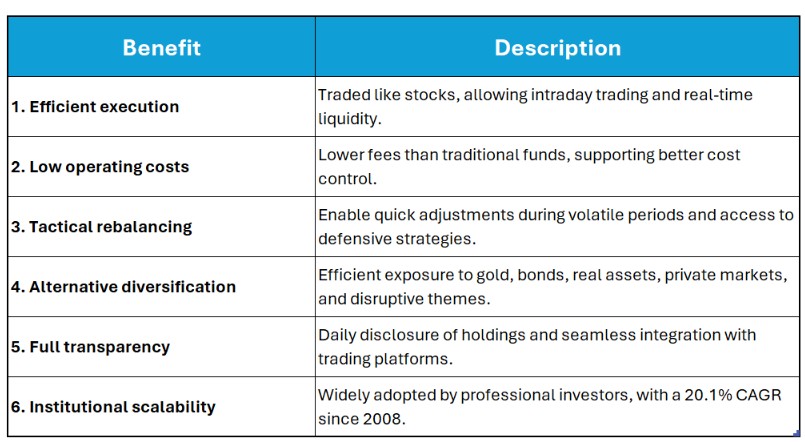
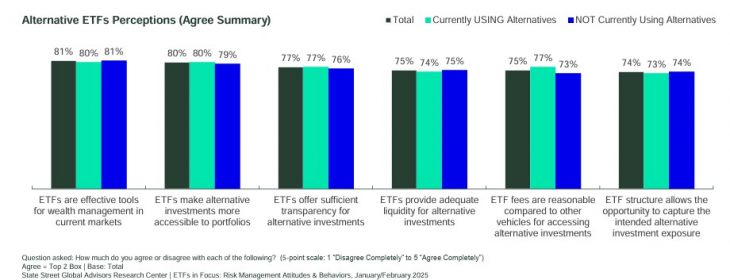
The advance of the ETF industry seems unstoppable. Increasingly, these products are detaching from the traditional conception of passive investment and are being considered management instruments with growing weight due to their efficiency. The question is whether, as an investment vehicle and thanks to their constant innovations and evolutions – including actively managed ETFs – they will ultimately displace traditional mutual funds in portfolios.

At the recent IMPower Incorporating Fund Forum held in Monte Carlo (Monaco), several experts shared their perspectives and participated in a debate analyzing the growth of ETFs and their potential and innovations. During a breakfast at the forum, Deborah Fuhr, Managing Partner and Co-founder of ETFGI, highlighted the multiple benefits of ETFs and their broad asset coverage, which has led them to reach record assets close to $13 trillion. Therefore, it is an industry to watch closely, analyzing its evolutions and opportunities.

Their acceleration has been enormous, partly supported by their flexibility and their advancement beyond pure passive investment: “They can also be active instruments. We have realized that ETFs are a very useful, extremely transparent, and flexible wrapper. Since their inception, ETFs have evolved from a market-capitalization-based vehicle to a very flexible one, and that is one of the reasons for their explosion. And, from a distribution standpoint, it is also seen much more simply than 10 years ago,” added Howie Li, Global Head and ETFs LGIM.

The Retail Investor’s Bet

“The ETF is a very transparent and efficient vehicle, ideal for making investment decisions and accessing different trends (AI, megatrends, sustainability, digital assets…), which explains its growth and adoption first by institutional investors and now by retail investors,” said Marie Dzanis, Former CEO, EMEA, Veteran CEO.

In fact, this is one of the major changes explaining their success: the adoption by retail investors, especially in the U.S., also due to the tax benefits in the country, but it is also happening in Europe, particularly in markets like Germany or the United Kingdom. “Retail investors are used to buying individual stocks, and that buying experience can extend to the purchase of a fund, which attracts the retail sector,” added Li.

Innovation and Actively Managed ETFs

This growing appetite has also led firms to move into a space they were not in a few years ago. “Many firms are entering the ETF industry, and one way to do this is by converting mutual funds into ETFs with index structures,” recalled Fuhr.

The development of proprietary indices to follow, or new active management structures based on indices, within an ETF wrapper – more transparent and cost-effective – is driving the ETF industry’s growth to unprecedented levels and reviving the debate not just between active and passive investment but about the best instrument for portfolios.

“The debate has gone beyond active versus passive management and is now focused on ETFs versus other investment vehicles,” said Philippe Uzan, Deputy CEO – CIO Asset Management at iM Global Partner.

“I would separate ETFs from the active vs. passive investment debate: ETFs are the result of industry innovation, the most efficient instrument for investing, for institutional and individual investors. If I have to choose between active or passive investment, it will all depend on the market context,” said Mussie Kidane, CIO, North America Advisors at Pictet.

The expert went further, noting that “in the United States, actively managed ETFs are leading market innovation and development, offering immediacy, transparency, and tax advantages. A traditional fund investor has to pay, but ETFs offer near-zero fees, and this is changing the industry’s playing field.” In his view, traditional funds represent a “dying industry in the U.S. while many investments are being built in ETF format” due to their efficiency. The expert argued that when there is a highly efficient instrument, supported by innovation, it can “kill” other instruments: “The amount of innovation happening in the U.S. in the world of ETFs is incredible,” he continued.

Controversial statements not all experts agreed with, especially professionals working on the European side: “I agree that ETFs have advantages in the U.S. that do not exist in Europe, but if they arrive, they could be a preferred instrument,” said Uzan. However, in his opinion, “the fund industry is changing, not dying. Those who do not change are the ones who die,” he defended.

Sustainability and Crypto

Debates at the forum also touched on ETFs as a way to access sustainable investments: “The issue of sustainability is stronger in Europe than in the U.S., but it cannot be denied. We have moved from an exclusion perspective to looking at companies’ behavior metrics and seeking ESG leaders, but in recent months, the focus has been on how this will work from a transition perspective, and the industry has realized it will take years and that the role of traditional companies cannot be denied. It will be acknowledged, and sustainable solutions will evolve,” commented Li.

Another significant innovation in this industry is ETFs that provide access to digital assets and cryptocurrencies through “solid and regulated structures.” Experts recalled that the launch of the first spot bitcoin ETF was the most successful in history.

Fixed Income Catch-up

The innovation in the ETF world is undeniable, but there are also advances regarding traditional assets: Tim Edwards, Managing Director and Global Head of Index Investment Strategy at S&P Dow Jones Indices (S&P DJI), provided a statistic: the majority of indexed funds are still in the equity space, and the total amount of equity worldwide invested through indices is about 20%, compared to 2% for fixed income. However, fixed income indexed vehicles are growing faster, he noted.

Uzan highlighted the difficulties managers have in beating the indices and yet defended that “fixed income is still a great territory for active management.” In his opinion, one of the keys for active managers is not to stick to or restrict themselves to a single investment category but to look at the entire investment universe. For other experts, vehicles that replicate indices have value in the most liquid areas of the asset, such as government or investment-grade corporate debt, while active management can apply to other segments of this market.

Is This Portfolio Rebalancing Movement Sustainable?

  |   By  |  0 Comentarios

The attempted assassination of Donald Trump increased his lead over Joe Biden by 7 points (from 60 last Saturday to 67 today) according to betting houses. In the average polls compiled by RealClearPolitics, it has remained much more stable, rising from 47.2 to 47.4.

Although gauging the impact that the assassination attempt may have at the polls next November is mostly a matter of speculation, there is a clear effect on sentiment reflected in the bets of Americans (PredictIt, Polymarket), consistent with historical precedents such as the attacks suffered by Teddy Roosevelt in 1912 or Ronald Reagan in March 1981, which were not very long-lasting.

The adjustment of perspectives at the political level and in the macroeconomic sphere following the digestion of macro data, which point to a reasonable moderation in the pace of expansion (confirmed by the surprising retail sales figures) and the return of the disinflationary trend in price indices, are justifying a repositioning of institutional investors’ portfolios. Gold has hit a new high, the yield curve has steepened, and stock market bets are being reassigned.

With uncertainty in the geopolitical and international trade spheres on the rise and the monetary policy cycle declining, the rotation from megacap companies to small and mid-cap companies has gained momentum in recent sessions, as demonstrated by the 12% lead of the Russell 2000 over the Nasdaq in the last five days. This is a mark not seen since April 2001 (against the S&P 500, the movement has no historical precedent) and leaves the technology and communication services sectors trailing in terms of profitability in a global context.

These price movements show that investors support the idea that interest rate cuts, which could be larger than the market anticipates, will sustain this cycle for a little longer to the benefit of companies that have suffered the most from the 2022-2023 monetary tightening cycle.

However, to confirm this thesis, we will need to see not only a turning point in monetary policy (U.S. small caps are ~3x more leveraged in Debt/EBITDA than large companies and more dependent on variable-rate bank loans) but also a recovery in EPS, which is not assured if, as we think, the cycle is more likely to be ending than extending.

The publication of second-quarter results will provide information in this regard, but as we see in the chart and according to SME surveys, it is unlikely that high-yield credit spreads will support the excessive price increases of the past few sessions for much longer.

Behind the momentum in small-cap prices, we find the hot money of retail investors who have rushed en masse to buy ETFs and the gamma short positions of traders. As we can see in the table, and consistent with what we explained above, in the last 5 days there have been net purchases worth more than $4 billion in the Russell 2000 ETF and notable increases in other ETFs associated with a recovery in economic activity (industrials, financials), gold, and the equal-weight S&P 500 ETF, which dilutes the influence of tech megacaps.

In summary, an excessive gap between large-cap indices (S&P 500 and Nasdaq) and small-cap indices (S&P 600, Russell 2000, Russell 2500), in the context of June macro data supporting the soft landing scenario (employment, retail sales, industrial production, inflation), has led to a shift in the rhetoric of several Fed members and investors’ perceptions of interest rate trends (adding a -0.25% adjustment to their expectations from a week ago, moving the first cut from November to September).

The coincidence, moreover, with the increased likelihood of a “red wave” in the November presidential elections and Trump’s choice of a vice president who will not discomfort him at all, has led U.S. fund managers and retail investors to rush to buy cyclical/value/small-cap stocks while unloading what has risen the most (growth/semis/AI).

The question is: Is this portfolio rebalancing movement sustainable? Given the uncertainty about which scenario will prevail in 8-12 months (with a higher probability for a slowdown/mild recession than for a soft landing in our opinion), it is difficult to make a forecast with conviction.

The retail sales figure, which posted the strongest rise in three months in June, one of the catalysts for what happened this week, seems actually taken out of context: the inertia in EPS and sales revisions for consumer companies (Nike, Pepsi, Delta, Chipotle, Starbucks) in the U.S. has accumulated 10 consecutive weeks of downward adjustments. We recently commented in this column on how lower-income households have been more concerned about their finances and are concentrating their spending on essentials and moving towards store brands.

The savings rate as a percentage of disposable income is below 4%, and credit card and consumer loan delinquencies have skyrocketed. Similarly, according to the U.S. Consumer Behavior Study compiled monthly by Bank of America, credit card spending contracted by 0.5% in June, and the series has shown a negative trend since February. Additionally, the labor market will continue to cool in the coming months.

The update of the “Beige Book,” which at first glance supports the soft landing scenario (less inflation, growth moderation), also provides a perspective that contrasts with the retail sales data.

Of the 12 Fed districts participating in the compilation of the Summary of Current Economic Conditions (or Beige Book), 5 point to flat or declining activity this time: three more than in the previous report. The report also shows moderation in labor demand and more selective hiring by employers. And, in line with our comments and the Bank of America document’s conclusions, most districts report an increase in discount campaigns by retailers in response to more price-sensitive consumers, focusing mainly on essential goods and willing to buy lower-quality but cheaper products.

Regarding the Fed’s plans, it is very likely that cuts will begin in September (the market assigns a 95.5% probability). The yield curve is steepening, which is implicitly favorable for value themes, cyclical bets, and small businesses. The trend towards the 2% inflation target will become more evident as service prices continue to moderate and the housing cost components of CPI/PCE more clearly reflect the decline in rental costs in the market.

There could even be a positive surprise in the amount of cuts by the end of the year (3 instead of 2?), but this would come with a more pronounced deterioration in the labor market, negatively affecting credit and therefore harming small caps. Moreover, if history is a guide, the bullish momentum of these types of stocks following Trump’s unexpected victory in 2016 did not take long to deflate.

As for Trump’s return to the White House, it is the most likely bet, but things can happen between now and November. The announcement of Joe Biden’s departure (and his replacement on the ticket by Kamala Harris, accompanied by Ray Cooper, Mark Kelly, or Andy Beshear as vice-presidential candidate) could happen in a matter of days, following the sharp turn in the polls after the debate and the fundraising collapse on the Democratic side.

Clearly showing this, polls give Trump a two-point lead in Virginia, a traditionally Democratic stronghold that Biden easily won in 2016 (+10 points). With Biden’s departure, undecided Democrats about his ability to lead the country for another four years could support another candidacy, diluting the potential for large Republican majorities in the House and Senate.

And regarding the betting advantage, it has almost vanished (from 69 to 62), in line with what happened in 1981 after the attempted assassination of Ronald Reagan (3/30/1981).

Although Trump would still be the favorite, it is possible that the market is exaggerating the benefits a new mandate would bring to investors. Trump has learned in the past four years that inflationary policies have severely damaged his opponent’s image. Additionally, his 2016 victory was a surprise, whereas it is now partially priced in.

Then, the prospects of rising inflation were one of the main causes of the “bear steepening,” which would initially favor portfolio repositioning; this time, the cycle is much more mature, and disinflation prevails. Finally, the room for fiscal aggression is significantly reduced: debt-to-GDP is at 99% (76% in 2016), and interest payments on GDP are almost triple (3.1% vs. 1.4%).

Extending the 2016 TCJA tax cuts will have a lower fiscal multiplier than Biden’s expansive plans (IRA, CHIPs, infrastructure). If he manages to impose his project of a 10% tariff increase on imported goods, it will initially

drive up inflation and benefit domestic demand (small caps), but it will eventually be a deflationary measure.

Despite everything, for those looking to jump on the small business bandwagon, it is important to note the differences between the indices: S&P 600 offers more quality, while Russell 2000 has more dynamite.


Capital Group Expands Its Fixed Income Team in Europe

  |   By  |  0 Comentarios

Capital Group has bolstered its investment capabilities by hiring Álvaro Peró Gala as Fixed Income Investment Director. According to the asset manager, Peró will be integrated into the team of investment specialists to bring Capital Group’s fixed income offering to retail and institutional clients across Europe.

Additionally, he will be part of the client teams for the Iberian Peninsula and U.S. offshore, supporting local clients as a fixed income expert, bringing his investment experience and bond market knowledge. He will be based in London and report to Scott Steele, Head of Fixed Income Asset Class in Europe and Asia.

He joins from PIMCO, where he held the position of Vice President and played a significant role in expanding both the retail and institutional business within the firm’s distribution network in Iberia. At PIMCO, he also worked with the global wealth management team in London, focusing on global financial intermediaries and family offices. Before PIMCO, Álvaro honed his consulting experience in various industries, including the banking and energy sectors. He also holds an MBA from INSEAD.

Following this appointment, Mario González, Head of Business in Iberia and U.S. offshore at Capital Group, stated, “It remains a constant priority for us to ensure that our clients always receive first-class service with access to well-researched investment opportunities.”

In González’s opinion, the Iberia and U.S. offshore markets hold strategic importance for Capital Group. “We are delighted to welcome Álvaro as we work closely together to offer our fixed income capabilities to investors throughout the region,” he said.

Álvaro Peró Gala, Fixed Income Investment Director, commented, “I am thrilled to join a company with a differentiated investment process, a solid track record of achieving robust results, and over 50 years of fixed income investing history. Despite economic uncertainties, the global fixed income market offers considerable potential. I look forward to meeting with clients to provide them with Capital Group’s global fixed income products and solutions to help them achieve their long-term investment goals.”

Julius Baer Appoints Stefan Bollinger as CEO

  |   By  |  0 Comentarios

After an “exhaustive” search, Julius Baer has announced that the Board of Directors has appointed Stefan Bollinger as the new CEO. According to the announcement, Bollinger will begin his new role at Julius Baer on February 1, 2025.

Stefan Bollinger is currently co-head of Private Wealth Management for Europe, Middle East, and Africa (PWM EMEA) at Goldman Sachs in London. He is also a member of the European Management Committee and the Global Wealth Management Operating Group. Under his leadership over the past five years, the PWM EMEA business more than doubled its assets under management.

Bollinger has three decades of experience in financial markets, having held various roles in trading, structuring, sales, treasury, and wealth management. Throughout his career, he has been based in Hong Kong, London, Luxembourg, New York, and Zurich. Stefan Bollinger joined Goldman Sachs in 2004 and has been a Partner for 14 years. Prior to joining Goldman Sachs, he worked at J.P. Morgan in London, although he began his career at Zürcher Kantonalbank.

Following this announcement, Romeo Lacher, Chairman of Julius Baer, stated: “We look forward to welcoming Stefan Bollinger to Julius Baer. He has an excellent track record in global banking and wealth management. He was instrumental in expanding Goldman Sachs’ presence in Asia, Europe, the Middle East, and Africa. Stefan led and built outstanding businesses, most of them at the intersection of wealth management and capital markets. His experience combines a comprehensive understanding of risk, products, and how to deliver value to global wealth management clients through building scalable, client-centric businesses. He brings a unique combination of leadership, client and people skills, along with solid technical knowledge and functional experience to Julius Baer. Under Stefan’s leadership, we will strengthen Julius Baer as the leading pure private bank and create the best conditions for sustainable growth. Our priorities to achieve this are to create value for clients and shareholders in everything we do, strengthen and ensure cutting-edge risk management, and foster a culture of excellence.”

For his part, Stefan Bollinger mentioned his excitement about joining Julius Baer and added: “I look forward to working closely with the Board, the management team, and everyone at Julius Baer to capitalize on its unique strengths and shape the next chapter of client-centricity, risk management excellence, and sustainable growth.”

The arrival of Bollinger in February 2025 will mean that Nic Dreckmann, who has been the interim CEO of Julius Baer, will step down from these functions. “On behalf of the Board of Directors, I want to thank Nic Dreckmann for serving as interim CEO at a decisive moment. Nic and his team have done an exceptional job leading Julius Baer during a challenging time, with great focus on our clients and delivering solid results. Nic will continue to lead the Group until Stefan’s arrival and ensure a smooth transition. After the transition, we look forward to having Nic continue as a member of the Executive Board,” stated Lacher.

Markets at Highs: What Will Come First, a Correction or a Rotation?

  |   By  |  0 Comentarios

In the equity market, historical highs can evoke mixed feelings. According to investment firms, historically, bull markets have lasted much longer than bear markets, reaching new highs in each cycle and creating opportunities.

For example, following the earnings presentation of U.S. banks, the good results reflect the positive state of the sector in the last quarter before expected rate cuts in September by the Fed and ECB. However, the equity markets saw sales gain momentum due to bans on exporting advanced technology to China for AI development. “Thus, stocks like Nvidia and ASML suffered losses close to double digits, dragging down major indices: the S&P 500 lost 2% over the last 5 days compared to -4% for the Nasdaq and -4.3% for the Euro Stoxx 50, while the Ibex 35 fell only 1.45% due to its lower tech weight,” notes Portocolom’s investment team.

Edmond de Rothschild AM’s latest analysis indicates that recent U.S. political events have reinforced the large rotation underway since inflation data was released a few weeks ago. “Investors are replacing large-cap companies with small caps, tech stocks with energy and real estate, and growth with value,” they note.

“With the momentum of energy stocks, the U.S. market continues to reach new highs, diverging from the sideways movement of the European stock market, which has not reached new highs since April. Issues in China are affecting Europe’s main sector, leaving it behind in stock market gains,” explain Activotrade.

When the market hits a new high, investors might conclude that the market has peaked and they’ve missed the opportunity. According to Capital Group, nothing could be further from the truth. “Over long periods, markets have tended to rise and reach multiple highs in a cycle,” they note.

Everyone knows that market declines are inevitable and can happen at any time. But according to Capital Group, history has shown that periods when markets hit new highs have offered an attractive entry point for long-term investors. “Since 1950, whenever the S&P 500 index has reached its first all-time high in at least a year, the average equity return has been 17.1% in the following twelve months. Except at the start of the 2007 financial crisis, an investor would have gained in all these periods,” explain Capital Group.

“That’s why we focus on themes like globalization, productivity, and innovation, which drive growth significantly. We will face market declines, but these have not changed the long-term trajectory. Hence, I usually advocate for market appreciation,” adds Martin Jacobs, equity manager at Capital Group.

According to Yves Bonzon, CIO of Swiss private bank Julius Baer, the market’s performance has been good so far this year, and it seems the bears have capitulated for the sake of their careers. “Consequently, it wouldn’t take much to reset the greed (bullish sentiment) and fear (bearish sentiment) indicator back towards fear. The risk/reward ratio for the second half of the year is the least attractive we’ve seen in a long time. To be clear, we still believe the main trend is bullish. Therefore, we are trying to protect against an intermediate correction in a bullish trend,” states Bonzon.

For Julius Baer’s CIO, the narrative is now shifting towards a healthy rotation but not immediately. “Although still to be seen, we are not convinced of the likelihood of a swift and convenient shift towards a much broader U.S. equity bull market where the equally weighted S&P 500 suddenly outperforms its market-cap weighted counterpart. In other words, the economy may enjoy Goldilocks-like conditions, but markets are rarely so kind. We doubt the Goldilocks scenario for equities, with a broad market rise, began last Thursday,” he argues.

Another sign that a sustainable rotation has not yet begun is the disappointing performance of European and Chinese equities. “If such a rotation is underway, European and Chinese equities do not seem to be benefiting from it. We believe the odds of a correction are higher than those of a sustainable rotation. We cannot overlook the disturbances that likely would have flooded the U.S. if the assassination attempt on former President Trump had succeeded,” he asserts.

Second Half Outlook

According to DPAM, we are in an atypical cycle characterized by persistent economic growth amid restrictive monetary policy, causing concern for both bulls and bears. “The balance between disinflation, growth, interest rate hikes, and long-term secular themes continues. Bulls currently have the upper hand, as evidenced by the new market highs,” notes Johan Van Geeteruyen, CIO of Fundamental Equity at DPAM.

In this context, Van Geeteruyen believes that investors have yet to react and prefer large caps until economic stability improves, with monetary tightening also affecting small caps. “We believe the best strategy is to accumulate positions gradually, as several catalysts, such as ECB rate cuts, improved macroeconomic conditions, and low positioning, suggest an imminent shift. The recent improvement in flows, with the return of U.S. investors, could also be a strong catalyst,” he notes.

According to their forecasts, the market expects growth recovery in 2024 and 2025. They believe the composite PMI has risen above 50, thanks to the strength of the services PMI, and the manufacturing PMI has improved from 45 at the beginning of the year to over 47. This turning point historically indicates an imminent superior performance of small caps, which are sensitive to economic improvements but have been at recessionary valuation levels for over two years.

“We remain neutral on the U.S. due to valuation issues but lean towards overweighting Europe. We avoid underweighting the U.S. due to its dynamism and safe-haven status. Factors supporting our overweight position in Europe include improving macroeconomic indicators, increased business confidence, a resurgence in business activity, attractive capital distribution, and undervalued AI dissemination,” points out Van Geeteruyen.

Schroders Capital Launches Pilot Project for Tokenization to Invest in ILS

  |   By  |  0 Comentarios

Schroders Capital has announced the launch of an innovative pilot project designed to enhance the investment and management of insurance-linked securities (ILS). This pilot has been a collaboration with the global reinsurance company Hannover Re.

The project is part of Schroders’ commitment to innovation and leadership in digital assets, following their participation in the Monetary Authority of Singapore’s “Project Guardian” last year and the issuance of the first digital bond in sterling by the European Investment Bank.

The initiative with Hannover Re, tested internally by Schroders, has successfully tokenized reinsurance contracts and traded them on a public blockchain platform using smart contracts. Each token represents a stake in a portfolio of reinsurance contracts, demonstrating how ILS funds could invest through a digital ecosystem in the future.

According to the investment firm, tokenizing these contracts has allowed, with constant oversight from investment professionals, the automation of many time-consuming processes. For instance, the investment process has been streamlined by automating subscriptions and reducing settlement times.

Additionally, by integrating key data sources for catastrophe insurance into smart contracts, payments to the appropriate recipient are automatically triggered if specific natural disasters, such as hurricanes or earthquakes in the U.S. or windstorms in Europe, occur.

The pilot project has also shown the potential to improve the customer experience by increasing accessibility, allowing tokens to be held in investors’ digital wallets alongside their other digital investments. The use of a public blockchain has also enhanced transparency while maintaining proper governance and controls.

Earlier this year, Schroders Capital announced that its ILS team now manages over $5 billion in funds as client demand continues to grow. The ILS team is part of Schroders Capital’s Private Debt and Credit Alternatives (PCDA) business, which was launched last year and manages over $30 billion in assets.

“The success of this pilot project highlights the immense potential to increase transparency, streamline investment processes, and enhance the customer experience in the reinsurance sector. It paves the way for a more interconnected and efficient digital ecosystem, and we look forward to exploring the broader application of this technology to more investment scenarios and clients,” said Stephan Ruoff, Co-Head of Private Debt and Credit Alternatives at Schroders Capital.

Henning Ludolphs, Managing Director of Retrocession and Capital Markets at Hannover Re, added, “This pilot project has been a great opportunity to understand the capabilities of blockchain technology when applied to the reinsurance market. With solid governance and integrated compliance, the pilot also demonstrated that the regulatory and operational risks surrounding blockchain are similar to those of other market transactions. While it is an emerging technology, we foresee greater appetite for such investments in the future, and this pilot prepares us well to evolve our approach and generate more retrocession capacity through a different source.”

Innovation is a key aspect of Schroders Capital’s strategy, and the findings from this project will be used to explore further tokenization opportunities in the reinsurance market. Additionally, the company recently unveiled the launch of the Generative AI Investment Analyst platform, designed to accelerate the analysis of large volumes of data.